 |
Aleph-w
1.9
General library for algorithms and data structures
|


|
|
Aleph-w
1.9
General library for algorithms and data structures
|
|
#include <tpl_dynDlist.H>
 Inheritance diagram for Aleph::DynDlist< T >: Collaboration diagram for Aleph::DynDlist< T >:
Classes | |
| class | Iterator |
Public Types | |
| using | Set_Type = DynDlist |
| The type of container. | |
| using | Item_Type = T |
| The type of element that stores the container. | |
| using | Key_Type = T |
| The type of element that stores the container. | |
| using | key_type = T |
| The data type. | |
| using | iterator = StlIterator< SetName > |
| using | const_iterator = StlConstIterator< SetName > |
Public Member Functions | |
| const size_t & | size () const noexcept |
| Return the number of elements (constant time) | |
| Special_Ctors (DynDlist, T) | |
| void | empty () noexcept |
| Empty the list. | |
| ~DynDlist () | |
| Destructor. | |
| T & | insert (const T &item) |
| T & | insert (T &&item) |
| T & | append (const T &item) |
| T & | append (T &&item) |
| void | insert (const DynDlist &list) |
| void | insert (DynDlist &&list) noexcept |
| void | append (const DynDlist &list) noexcept |
| void | append (DynDlist &&list) noexcept |
| T & | get_first_ne () const noexcept |
| Return a modifiable reference to first item in the list. | |
| T & | get_last_ne () const noexcept |
| Return a modifiable reference to last item in the list. | |
| T & | get_first () const |
| Return a modifiable reference to first item in the list. | |
| T & | get_last () const |
| Return a modifiable reference to last item in the list. | |
| T | remove_first_ne () noexcept |
| T | remove_last_ne () noexcept |
| T | remove_first () |
| T | remove_last () |
| T & | put (const T &item) |
| T & | put (T &&item) |
| T | get () |
| T & | rear () |
| T & | front () |
| T & | push (const T &item) |
| T & | push (T &&item) |
| T | pop () |
| T & | top () const |
| void | remove (T &data) noexcept |
| void | erase (T &data) noexcept |
| void | swap (DynDlist &l) noexcept |
| void | split_list_ne (DynDlist &l, DynDlist &r) noexcept |
| void | split_list (DynDlist &l, DynDlist &r) |
| void | split (DynDlist &l, DynDlist &r) |
| DynDlist< T > & | operator= (const DynDlist &list) |
| DynDlist (const DynDlist &list) | |
| DynDlist (DynDlist< T > &&list) noexcept | |
| DynDlist< T > & | operator= (DynDlist &&list) noexcept |
| T & | operator[] (const size_t &n) const |
| DynDlist & | reverse () noexcept |
| DynDlist & | rev () noexcept |
| DynDlist< T > | reverse () const |
| DynDlist< T > | rev () const |
| Dnode< T > *& | get_next () const noexcept |
Return the next node to this | |
| Dnode< T > *& | get_prev () const noexcept |
Return the previous node to this | |
| Dnode< T > * | remove_prev () noexcept |
Remove the previous node to this; return its address. | |
| Dnode< T > * | remove_next () noexcept |
Remove the next node to this; return its address. | |
| Dnode & | swap (Dnode &p) noexcept(noexcept(std::swap(data, p.data))) |
Swap this with p | |
| void | swap (Dlink *link) noexcept |
| void | swap (Dlink &l) noexcept |
| T & | get_data () noexcept |
| Return a modifiable reference to the data contained in the node. | |
| const T & | get_data () const noexcept |
| Return a modifiable reference to the data contained in the node. | |
| T & | get_key () noexcept |
| const T & | get_key () const noexcept |
| template<typename T > | |
| Dnode< T > * | to_dnode () noexcept |
| template<typename T > | |
| const Dnode< T > * | to_dnode () const noexcept |
| template<typename T > | |
| T & | to_data () noexcept |
| template<typename T > | |
| const T & | to_data () const noexcept |
| void | reset () noexcept |
| void | init () noexcept |
| bool | is_empty () const noexcept |
Return true if this (as header node) is empty. | |
| bool | is_unitarian () const noexcept |
Return true if this (as header node) has exactly one element. | |
| bool | is_unitarian_or_empty () const noexcept |
Return true if this (as header node) has zeor or one element. | |
| void | insert (Dlink *node) noexcept |
| void | push (Dlink *node) noexcept |
| void | append (Dlink *node) noexcept |
| void | wrap_header (Dlink *l) noexcept |
| void | insert_list (Dlink *head) noexcept |
| void | append_list (Dlink *head) noexcept |
| void | splice (Dlink *l) noexcept |
| void | concat_list (Dlink *head) noexcept |
| void | concat_list (Dlink &head) noexcept |
| Dlink * | del () noexcept |
Remove this from the list. this must not be a header node. | |
| void | erase () noexcept |
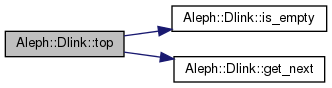
| Dlink * | top () |
| size_t | reverse_list () noexcept |
| size_t | split_list_ne (Dlink &l, Dlink &r) noexcept |
| size_t | split_list (Dlink &l, Dlink &r) noexcept |
| Dlink | cut_list (Dlink *link) noexcept |
| void | remove_all_and_delete () noexcept |
| void | rotate_left (size_t n) |
| void | rotate_right (size_t n) |
| bool | check () |
Return true if the list is consistent. | |
| bool | traverse (Operation &operation) noexcept(noexcept(operation)) |
| bool | traverse (Operation &operation) const noexcept(noexcept(operation)) |
| bool | traverse (Operation &&operation) const noexcept(noexcept(operation)) |
| bool | traverse (Operation &&operation) noexcept(noexcept(operation)) |
| auto | get_it () const |
| auto | get_it (size_t pos) const |
| auto | get_itor () const |
| T & | nth_ne (const size_t n) noexcept |
| const T & | nth_ne (const size_t n) const noexcept |
| T & | nth (const size_t n) |
| const T & | nth (const size_t n) const |
| T * | find_ptr (Operation &operation) noexcept(noexcept(operation)) |
| const T * | find_ptr (Operation &operation) const noexcept(noexcept(operation)) |
| const T * | find_ptr (Operation &&operation) const noexcept(noexcept(operation)) |
| T * | find_ptr (Operation &&operation) noexcept(noexcept(operation)) |
| size_t | find_index (Operation &operation) const noexcept(noexcept(operation)) |
| size_t | find_index (Operation &&operation) const noexcept(noexcept(operation)) |
| std::tuple< bool, T > | find_item (Operation &operation) noexcept(noexcept(operation)) |
| std::tuple< bool, T > | find_item (Operation &operation) const noexcept(noexcept(operation)) |
| std::tuple< bool, T > | find_item (Operation &&operation) noexcept(noexcept(operation)) |
| std::tuple< bool, T > | find_item (Operation &&operation) const noexcept(noexcept(operation)) |
| void | emplace (Args &&... args) |
| void | emplace_end (Args &&... args) |
| void | emplace_ins (Args &&... args) |
| size_t | ninsert (Args ... args) |
| size_t | nappend (Args ... args) |
| void | for_each (Operation &operation) noexcept(noexcept(operation)) |
| void | for_each (Operation &operation) const noexcept(noexcept(operation)) |
| void | for_each (Operation &&operation) const noexcept(noexcept(operation)) |
| void | for_each (Operation &&operation) noexcept(noexcept(operation)) |
| void | each (Operation &operation) noexcept(noexcept(operation)) |
| void | each (Operation &operation) const noexcept(noexcept(operation)) |
| void | each (Operation &&operation) const noexcept(noexcept(operation)) |
| void | each (Operation &&operation) noexcept(noexcept(operation)) |
| void | each (size_t pos, size_t slice, Operation &operation) const |
| void | each (size_t pos, size_t slice, Operation &&operation) const |
| void | mutable_for_each (Operation &operation) noexcept(noexcept(operation)) |
| void | mutable_for_each (Operation &&operation) noexcept(noexcept(operation)) |
| bool | all (Operation &operation) const noexcept(noexcept(operation)) |
| bool | all (Operation &&operation) const noexcept(noexcept(operation)) |
| bool | exists (Operation &op) const noexcept(noexcept(op)) |
| bool | exists (Operation &&op) const noexcept(noexcept(op)) |
| DynList< __T > | maps (Operation &op) const |
| DynList< __T > | maps (Operation &&op) const |
| DynList< __T > | maps_if (Prop prop, Operation &op) const |
| DynList< __T > | maps_if (Prop prop, Operation &&op) const |
| DynList< T > | to_dynlist () const |
| __T | foldl (const __T &init, Op &op) const noexcept(noexcept(op)) |
| __T | foldl (const __T &init, Op &&op=Op()) const noexcept(noexcept(op)) |
| T | fold (const T &init, Operation &operation) const noexcept(noexcept(operation)) |
| T | fold (const T &init, Operation &&operation) const noexcept(noexcept(operation)) |
| DynList< T > | filter (Operation &operation) const |
| DynList< T > | filter (Operation &&operation) const |
| DynList< const T *> | ptr_filter (Operation &operation) const |
| DynList< const T *> | ptr_filter (Operation &&operation) const |
| DynList< std::tuple< T, size_t > > | pfilter (Operation &operation) const |
| DynList< std::tuple< T, size_t > > | pfilter (Operation &&operation) const |
| std::pair< DynList< T >, DynList< T > > | partition (Operation &op) const |
| std::pair< DynList< T >, DynList< T > > | partition (Operation &&op) const |
| std::pair< DynList< T >, DynList< T > > | partition (size_t n) const |
| std::tuple< DynList< T >, DynList< T > > | tpartition (Operation &op) const |
| std::tuple< DynList< T >, DynList< T > > | tpartition (Operation &&op) const |
| size_t | length () const noexcept |
| DynList< T > | take (const size_t n) const |
| DynList< T > | take (size_t i, size_t j, size_t step=1) const |
| DynList< T > | drop (const size_t n) const |
| void | mutable_drop (size_t n) |
| DynList< T > | items () const |
| DynList< T > | keys () const |
| iterator | begin () noexcept |
| const_iterator | begin () const noexcept |
| iterator | end () noexcept |
| const_iterator | end () const noexcept |
| const_iterator | cbegin () const noexcept |
| const_iterator | cbegin () noexcept |
| const_iterator | cend () const noexcept |
| const_iterator | cend () noexcept |
Static Public Member Functions | |
| static Dnode * | data_to_node (T &data) noexcept |
Protected Attributes | |
| Dlink * | prev |
| Dlink * | next |
Dynamic list of items of generic items of type T based on double linked lists.
|
inline |
Copy constructor; all items of list are copied.
The construction time is proportional to the number of items of list
| [in] | list | to be copied |
| bad_alloc | if there is no enough memory |
|
inlinenoexcept |
Move constructor; all items of list are moved.
The construction time is constant, independently of number of items of list
| [in] | list | to be moved |
| bad_alloc | if there is no enough memory |
|
inlinenoexceptinherited |
Check if all the elements of container satisfy a condition.
all(operation) checks if for each element item of container operation(item) returns true.
This method has complexity  in average and worst case.
| [in] | operation | to be used as condition |
true if all the elements satisfy the criteria: false otherwise. | anything | that could throw operation |
|
inlinenoexceptinherited |
This is an overloaded member function, provided for convenience. It differs from the above function only in what argument(s) it accepts.
|
inline |
Append a copied item at the end of the list.
| [in] | item | to be copied and appended at the end of the list |
| bad_alloc | si no hay memoria para el nuevo elemento. |
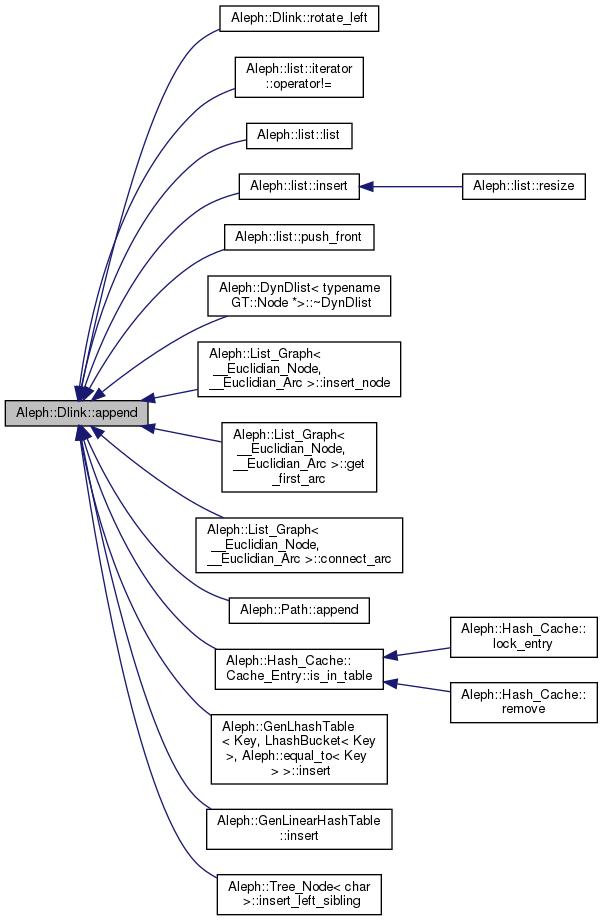
Here is the caller graph for this function:
|
inline |
Append a moved item at the end of the list.
| [in] | item | to be moved and appended at the end of the list |
| bad_alloc | si no hay memoria para el nuevo elemento. |
|
inlinenoexcept |
Append all the elements of list after this.
| [in] | list | to insert after this |
|
inlinenoexcept |
This is an overloaded member function, provided for convenience. It differs from the above function only in what argument(s) it accepts.
|
inlinenoexceptinherited |
Insert nodebefore this.
| [in] | node | pointer to an empty node (it must no be inserted in another list) |
Here is the caller graph for this function:
|
inlinenoexceptinherited |
Insert the list head after this
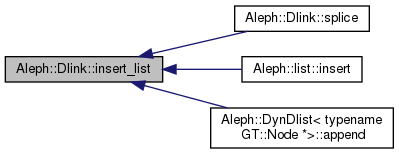
This method assumes that this is a node part of list; it is not the header node. On the other hand, head is the header node of an entire list. So, all the list head is entirely appended, in constant time, after the node this. After append, the list head becomes empty.
| [in] | head | header for the list to insert |
Here is the call graph for this function: Here is the caller graph for this function:
|
inlinenoexceptinherited |
Concatenate list head to list this
this and head are both header nodes of lists. concat_list(head) concatenates in constant time all the list head after this. After the concatenation head becomes empty.
| head | header node of list to concatenate |
Here is the call graph for this function: Here is the caller graph for this function:
|
inlinenoexceptinherited |
This is an overloaded member function, provided for convenience. It differs from the above function only in what argument(s) it accepts.
Here is the call graph for this function:Cut this from link.
cut_list(link) takes a valid link to an item of the list and on that link performs a cut; that is, all the items from link passes to a new list whose head is the return value.
The operation takes constant time.
Dlink object, not a pointer.link belongs to a list, then this one will be in an inconsistent state.| [in] | link | pointer to the item from which the cut will be done |
Dlink header of a new list containing the items from link Here is the call graph for this function: Here is the caller graph for this function:
|
inlinestaticnoexceptinherited |
Given an reference to the data in the node, returns a pointer to the Dnode object that contains it.
Here is the caller graph for this function:
|
inlineinherited |
Drop the first n elements seen in the container during its traversal.
The complexity of this method is  where N always is the number of elements of container.
DynList<T> having the remainder  elements according to traversal order.
 | bad_alloc | if there is no enough memory or out_of_range if n is greater or equal than N (the number of elements in the container). |
|
inlinenoexceptinherited |
This is an overloaded member function, provided for convenience. It differs from the above function only in what argument(s) it accepts.
|
inlinenoexceptinherited |
This is an overloaded member function, provided for convenience. It differs from the above function only in what argument(s) it accepts.
|
inlinenoexceptinherited |
This is an overloaded member function, provided for convenience. It differs from the above function only in what argument(s) it accepts.
|
inlinenoexceptinherited |
This is an overloaded member function, provided for convenience. It differs from the above function only in what argument(s) it accepts.
|
inlineinherited |
Traverse all the container and performs a mutable operation on each element.
mutable_for_each(operation) traverses the container and on each element item is performed operation(item).
operation could have the following signature:
void operation(T & item)
Be very careful with the fact that this method allows to modify the elements themselves, what could badly alter the internal state of container. This would be the case for heaps, binary trees and hash tables.
| [in] | <tt>operation</tt> | to be done on each element. |
this | anything | that can throw operation |
|
inlineinherited |
This is an overloaded member function, provided for convenience. It differs from the above function only in what argument(s) it accepts.
|
inlineinherited |
Appends a new element into the container by constructing it in-place with the given args.
emplace(args) tries to match a constructor T(args). If this exists, then this is constructed in-place and directly forwarded to the method append() of container. If all on the container and T` is adequately done, then the object is constructed once time, successively forwarded and at its target place in the container is moved, avoiding thus unnecessary copies.
append() is equivalent to insert().| [in] | args | variadic arguments list |
| bad_alloc | if there is no enough memory |
|
inlineinherited |
This is an overloaded member function, provided for convenience. It differs from the above function only in what argument(s) it accepts.
|
inlineinherited |
Insert a new element into the container by constructing it in-place with the given args.
emplace_ins(args) tries to match a constructor T(args). If this exists, then this is constructed in-place and directly forwarded to the method insert() of container. If all on the container and T` is adequately done, then the object is constructed once time, successively forwarded and finally, at its target place in the container, is moved, avoiding thus unnecessary copies.
insert() depends of container. In general, this has some sense for lists and arrays and it means insertion at the beginning of sequence. On other type of container append() is equivalent to insert().| [in] | args | variadic arguments list |
| bad_alloc | if there is no enough memory |
|
inlinenoexcept |
This is an overloaded member function, provided for convenience. It differs from the above function only in what argument(s) it accepts.
|
inlinenoexceptinherited |
This is an overloaded member function, provided for convenience. It differs from the above function only in what argument(s) it accepts.
Here is the call graph for this function:
|
inlinenoexceptinherited |
Test for existence in the container of an element satisfying a criteria.
exists(op) returns true if it exists any element item in container for which op(item) return true.
This method has complexity in average and worst case.
| [in] | op | operation for testing existence |
true if it exists an item for which op return true; false otherwise. | anything | that could throw op |
|
inlinenoexceptinherited |
This is an overloaded member function, provided for convenience. It differs from the above function only in what argument(s) it accepts.
|
inlineinherited |
Filter the elements of a container according to a matching criteria.
This method builds a dynamic list with copies of items of container matching a criteria defined by operation, which should have the following signature:
bool operation(const T & item)
If operation return true then item matches the criteria; otherwise, operation must return false.
For example, if the container has integer, the the following code snippet would return a list containing the items greater than 100:
c.filter([] (auto item) { return item > 100; });
| [in] | operation | defining the flter criteria |
DynList<T> with the matched elements. | anything | that could throw operation or bad_alloc if there is no enough memory |
|
inlineinherited |
This is an overloaded member function, provided for convenience. It differs from the above function only in what argument(s) it accepts.
|
inlinenoexceptinherited |
Find the position of an item in the container according to a searching criteria.
find_index(operation) traverses the container and on each item perform operation(item). If the result of operation is true, then the traversal is stopped and the position of the current item (which mathes operation) is returned.
operation must have the following signature:
bool operation(const typename Container::Item_Type & item)
| [in] | <tt>operation</tt> | to be performed on each item for matching a searching criteria. |
|
inlinenoexceptinherited |
This is an overloaded member function, provided for convenience. It differs from the above function only in what argument(s) it accepts.
|
inlinenoexceptinherited |
Safe sequential searching of an item matching a criteria.
find_item(operation) traverses the container and on each item perform operation(item). If the result of operation is true, then the traversal is stopped and duple containg a copy of found item is returned.
The method is said safe because returns a copy of item.
operation must have the following signature:
bool operation(const typename Container::Item_Type & item)
| [in] | <tt>operation</tt> | to be used as searching criteria |
false and the second is the result of default constructor on the type stored in the container.
|
inlinenoexceptinherited |
This is an overloaded member function, provided for convenience. It differs from the above function only in what argument(s) it accepts.
|
inlinenoexceptinherited |
This is an overloaded member function, provided for convenience. It differs from the above function only in what argument(s) it accepts.
|
inlinenoexceptinherited |
This is an overloaded member function, provided for convenience. It differs from the above function only in what argument(s) it accepts.
|
inlinenoexceptinherited |
Find a pointer to an item in the container according to a searching criteria.
find_ptr(operation) traverses the container and on each item perform operation(item). If the result of operation is true, then the traversal is stopped and a pointer to the current item (which mathes operation) is returned.
operation must have the following signature:
bool operation(const typename Container::Item_Type & item)
| [in] | <tt>operation</tt> | to be performed on each item for matching a searching criteria. |
nullptr otherwise.
|
inlinenoexceptinherited |
This is an overloaded member function, provided for convenience. It differs from the above function only in what argument(s) it accepts.
|
inlinenoexceptinherited |
This is an overloaded member function, provided for convenience. It differs from the above function only in what argument(s) it accepts.
|
inlinenoexceptinherited |
This is an overloaded member function, provided for convenience. It differs from the above function only in what argument(s) it accepts.
|
inlinenoexceptinherited |
Simplified version of foldl() where the folded type is the same type of elements stored in the container.
|
inlinenoexceptinherited |
This is an overloaded member function, provided for convenience. It differs from the above function only in what argument(s) it accepts.
|
inlinenoexceptinherited |
Fold the elements of the container to a specific result.
foldl(init, op) set an internal variable acc of type __T to init value. Then it traverses the container and on each item it performs:
acc = op(acc, op(acc, item);
So acc serves as a sort of accumulator.
op should have the following signature:
__T op(__T acc, const T & item);
Since foldl is overloaded with several operation structures, there is a certain flexibility with the parameter qualifiers. You could, for example, to declare acc and/or item by value.
The method is a template. The first template parameter __T specifies the final folded type. By default, this type is T (the type of elements stored in the container). The second parameter is the operation. If the folded type is the same than T (the type of item stored), the you can simply write a foldl(). For example, if the container stores integer, in order to determine the maximum of all elements you could do:
c.foldl(std::numeric_limits<int>::min(), [] (int acc, int item)
  {
    return std::min(acc, item);
  });
When the folded type is different than T, then you must specify the folded type as template parameter. For example, if you want to compute the sum of inversed elements, the you could do it as follows:
c.template foldl<double>(0, [] (double acc, int item)
  {
    return acu + 1.0/item;
  });
| [in] | init | initial value of folded value (or accumulator). |
| [in] | op | operation to be performed on each item and used for folding. |
| anything | that could throw op |
|
inlinenoexceptinherited |
This is an overloaded member function, provided for convenience. It differs from the above function only in what argument(s) it accepts.
|
inlinenoexceptinherited |
Traverse all the container and performs an operation on each element.
for_each(operation) traverses the container and on each element item is performed operation(item).
operation must have the following signature:
void operation(const T & item)
Overloadings of this method allow that that the signature can be lightly different; for example, remove the reference or the const.
| [in] | <tt>operation</tt> | to be done on each element. |
this | anything | that can throw operation |
|
inlinenoexceptinherited |
This is an overloaded member function, provided for convenience. It differs from the above function only in what argument(s) it accepts.
|
inlinenoexceptinherited |
This is an overloaded member function, provided for convenience. It differs from the above function only in what argument(s) it accepts.
|
inlinenoexceptinherited |
This is an overloaded member function, provided for convenience. It differs from the above function only in what argument(s) it accepts.
|
inline |
If this was treated as a queue, the it returns the most oldlest inserted item
|
inline |
This is an overloaded member function, provided for convenience. It differs from the above function only in what argument(s) it accepts.
Here is the caller graph for this function:
|
inlineinherited |
Return an properly initialized iterator positioned at the first item on the container
|
inlineinherited |
Return an properly initialized iterator positioned at the pos item on the container
|
inlineinherited |
This is an overloaded member function, provided for convenience. It differs from the above function only in what argument(s) it accepts.
|
inlinenoexceptinherited |
This is an overloaded member function, provided for convenience. It differs from the above function only in what argument(s) it accepts.
Here is the caller graph for this function:
|
inlinenoexceptinherited |
This is an overloaded member function, provided for convenience. It differs from the above function only in what argument(s) it accepts.
|
inlinenoexceptinherited |
This is an overloaded member function, provided for convenience. It differs from the above function only in what argument(s) it accepts.
Here is the call graph for this function: Here is the caller graph for this function:
|
inline |
Insert a copy of item at the beginning of the list
| [in] | item | to be copied and inserted at the beginning |
| bad_alloc | if there is no enough memory |
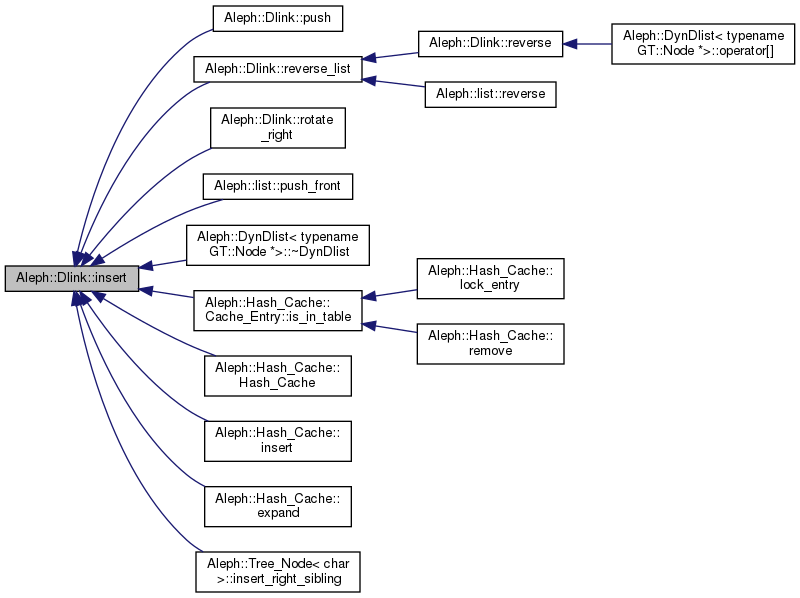
Here is the caller graph for this function:
|
inline |
Insert a moved item at the beginning of the list
| [in] | item | to be moved and inserted at the beginning of the list |
| bad_alloc | if there is no enough memory |
|
inline |
Insert all the elements of list before this.
| [in] | list | insert before this. |
|
inlinenoexcept |
This is an overloaded member function, provided for convenience. It differs from the above function only in what argument(s) it accepts.
|
inlinenoexceptinherited |
Insert node after this.
| [in] | node | pointer to an empty node (it must not be linked to nothing |
Here is the caller graph for this function:
|
inlinenoexceptinherited |
Insert the list head before this
This method assumes that this is a node part of list; it is not the header node. On the other hand, head is the header node of an entire list. So, all the list head is entirely inserted, in constant time, before the node this. After insertion, the list head becomes empty.
| [in] | head | header for the list to insert |
Here is the call graph for this function: Here is the caller graph for this function:
|
inlineinherited |
Return a list of all the elements of a container sorted by traversal order.
DynList<T> containing all the elements of the container | bad_alloc | if there is no enough memory |
|
inlineinherited |
This is an overloaded member function, provided for convenience. It differs from the above function only in what argument(s) it accepts.
|
inlinenoexceptinherited |
Count the number of elements of a container.
This method counts the number of elements stored in the container.
. However, for many containers this number is already stored and retrievable in  through the methos
 size()
|
inlineinherited |
Map the elements of the container.
maps(op) produces a dynamic list resulting of mapping of each element of container item to the result of operation op(item).
maps() is a template method which receives as template parameters the type __T, which is the type of target or range of mapping, and the transforming operation. By default __T is the same type of the elements stored in the container.
operation should have the following signature:
__T operation(const T & item)
So, operation(item) performs a transformation of item towards the type __T.
If __T ==T`, which is common and by default, then you could specify a mapping without need of template specification. For example, if the container has integer values, the a mapping of item multiplied by 4 could be very simply written as follows:
c.maps([] (int item) { return 4*i; });
In contrast, if the range type is different than the domain type, then it is necessary to specify the template keyword in the method call. For example, if the range is double and you want to return the elements divided by 4, the could do as follows:
c.template maps<double>([] (int item) { return 1.0*item/4; });
| [in] | op | operation to be performed in order to do the transformation on an item |
| anything | that could throw op or bad_alloc if there is no enough memory |
|
inlineinherited |
This is an overloaded member function, provided for convenience. It differs from the above function only in what argument(s) it accepts.
|
inlineinherited |
Conditional mapping of the elements of the container.
maps_if(prop, op) traverses each item of container, on each item it tests the proposition prop. If this last is true, then the item is mapped through the function op(item).
| [in] | op | operation to be perfomed in order to do the transformation on an item. |
| [in] | prop | a lambda returning a bool which perform the logical test. |
| anything | that could throw op or bad_alloc if there is no enough memory |
|
inlineinherited |
This is an overloaded member function, provided for convenience. It differs from the above function only in what argument(s) it accepts.
|
inlineinherited |
Drop the first n elements seen from container.
The complexity of this method is where N always is the number of elements of container.
| out_of_range | if n is greater or equal than N (the number of elements in the container). |
|
inlinenoexceptinherited |
This is an overloaded member function, provided for convenience. It differs from the above function only in what argument(s) it accepts.
|
inlineinherited |
Append n variadic items
| [in] | args | items to be appended |
|
inlineinherited |
Insert n variadic items
| [in] | args | items to be inserted |
|
inlineinherited |
Return the n-th item of container.
The notion of ordinal depends of type of container. On list, probably will be the insertion order. On binary search trees will be the nth smaller item. On hash tables will be pseudo random.
| [in] | n | the nth item to find |
| out_of_range | if n is greater or equal that the size of container. |
|
inlineinherited |
This is an overloaded member function, provided for convenience. It differs from the above function only in what argument(s) it accepts.
|
inlinenoexceptinherited |
This is an overloaded member function, provided for convenience. It differs from the above function only in what argument(s) it accepts.
|
inline |
Assignment by copy.
In this assignment this is emptied and the the items of list are copied to this. It takes since time proportional to the size of list more the old size of this
| [in] | list | to be copied |
| bad_alloc | if there is no enough memory |
|
inlinenoexcept |
Assignment by moving.
In this assignment this is swapped with list. So, this takes constant time independently of list sizes.
| [in] | list | to be assigned by moving |
| bad_alloc | if there is no enough memory |
|
inline |
Return a modifiable reference to the i-th item of the list. Throw overflow_error if n is greater than the list size
|
inlineinherited |
Exclusive partition of container according to a filter criteria.
partition(op) traverses the container and filters its elements according to the filter criteria defined by op. The filtered elements are copied to a first list and the not filtered ones to a second list. When all the container is traversed, a pair containing these lists is returned.
The op requirements are the same than for filter().
| [in] | op | operation instrumenting the filter criteria |
std::pair<DynList<T>, DynList<T>>.firstcontains the filtered elements andsecondthe non-filtered ones. \throw anything that could throw op orbad_alloc` if there is no enough memory
|
inlineinherited |
This is an overloaded member function, provided for convenience. It differs from the above function only in what argument(s) it accepts.
|
inlineinherited |
Exclusive partition of container in the nth item
partition(n) traverses the container and produces a pair of lists. The first one contains the first n elements and the second one the this->size() - n remaining elements.
| [in] | n | the first n items of the first list |
| anything | that could throw op or bad_alloc if there is no enough memory |
|
inlineinherited |
Filter the elements of a container according to a matching criteria and determine its positions respect to the traversal of container.
pfilter(operation) is very similar to filter(), but instead of building a list of filtered elements, it builds a list of pairs with form (item, pos), where item is a copy of filtered element and pos is its position respect to the traversal order. The position is relative to the container type.
The pair is defined with a tuple:
std::tuple<T, size_t>
| [in] | operation | that defines the filter criteria |
| bad_alloc | if there is no enough memory |
|
inlineinherited |
This is an overloaded member function, provided for convenience. It differs from the above function only in what argument(s) it accepts.
|
inline |
This is an overloaded member function, provided for convenience. It differs from the above function only in what argument(s) it accepts.
|
inlineinherited |
Filter the elements of a container according to a matching criteria an return pointer to the matched items in the container.
This method builds a dynamic list with stores pointers to the items of matching a criteria defined by operation, which should have the followgin signature:
bool operation(const T & item)
If operation return true then item matches the criteria; otherwise, operation must return false.
For example, if the container has integer, the the following code snippet would return a list containing the items greater than 100:
c.ptr_filter([] (auto item) { return item > 100; });
| [in] | operation | defining the flter criteria |
DynList<const T*> with the pointers to the matched elements. | anything | that could throw operation or bad_alloc if there is no enough memory |
|
inlinenoexceptinherited |
This is an overloaded member function, provided for convenience. It differs from the above function only in what argument(s) it accepts.
Here is the call graph for this function:
|
inline |
This is an overloaded member function, provided for convenience. It differs from the above function only in what argument(s) it accepts.
|
inline |
This is an overloaded member function, provided for convenience. It differs from the above function only in what argument(s) it accepts.
|
inline |
This is an overloaded member function, provided for convenience. It differs from the above function only in what argument(s) it accepts.
Here is the caller graph for this function:
|
inline |
This is an overloaded member function, provided for convenience. It differs from the above function only in what argument(s) it accepts.
|
inline |
If this was treated as a queue, the it returns the most recently inserted item
|
inlinenoexcept |
Assuming that data is a reference to the item in the list, it removes the item.
This method can be more powerful given that allows to remove any item in constant time given a valid reference to it.
| [in] | data | valid reference to the item in the list. |
|
inlinenoexceptinherited |
Remove and free memory for all the items of list.
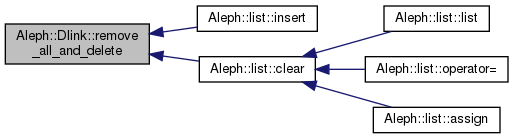
remove_all_and_delete() remove each item of the list and call to delete operator on the removed item. At the end of call, all the items were removed, all the memory freed qand the list emptied.
new. Although That is very frequently the case, there are some exceptions. So, be sure that the items were allocated with new operator. Here is the call graph for this function: Here is the caller graph for this function:
|
inline |
Remove the first item of the list; return a copy of removed item.
| underflow_error | if this is empty |
Here is the caller graph for this function:
|
inlinenoexcept |
Remove the first item of the list; return a copy of removed item.
Here is the caller graph for this function:
|
inline |
Remove the last item of the list; return a copy of removed item.
| underflow_error | if this is empty |
Here is the caller graph for this function:
|
inlinenoexcept |
Remove the last item of the list; return a copy of removed item.
Here is the caller graph for this function:
|
inlinenoexceptinherited |
Reset this
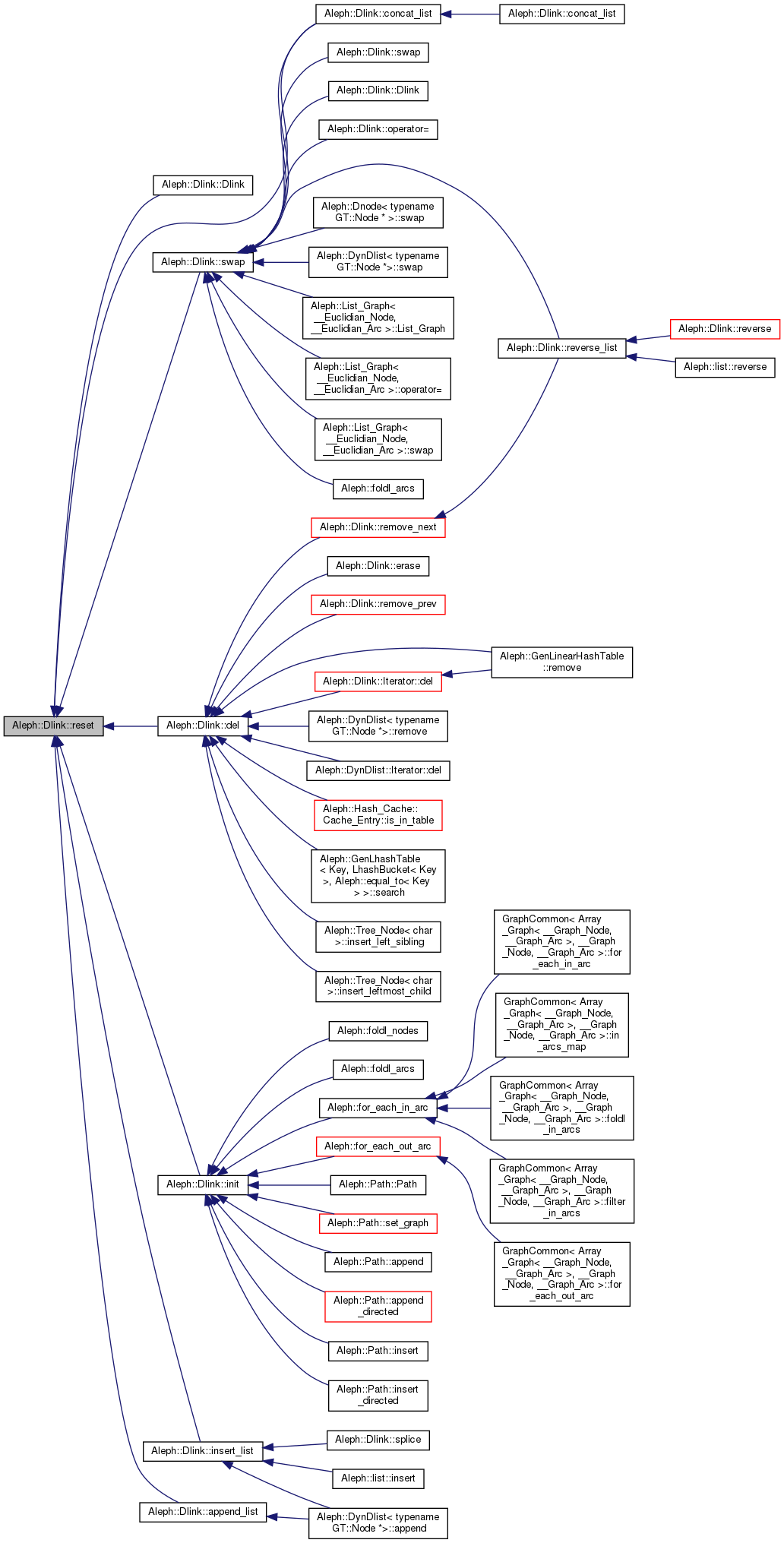
reset() reinitialize the node to point to itself. So, all the context is lost. Use with care.
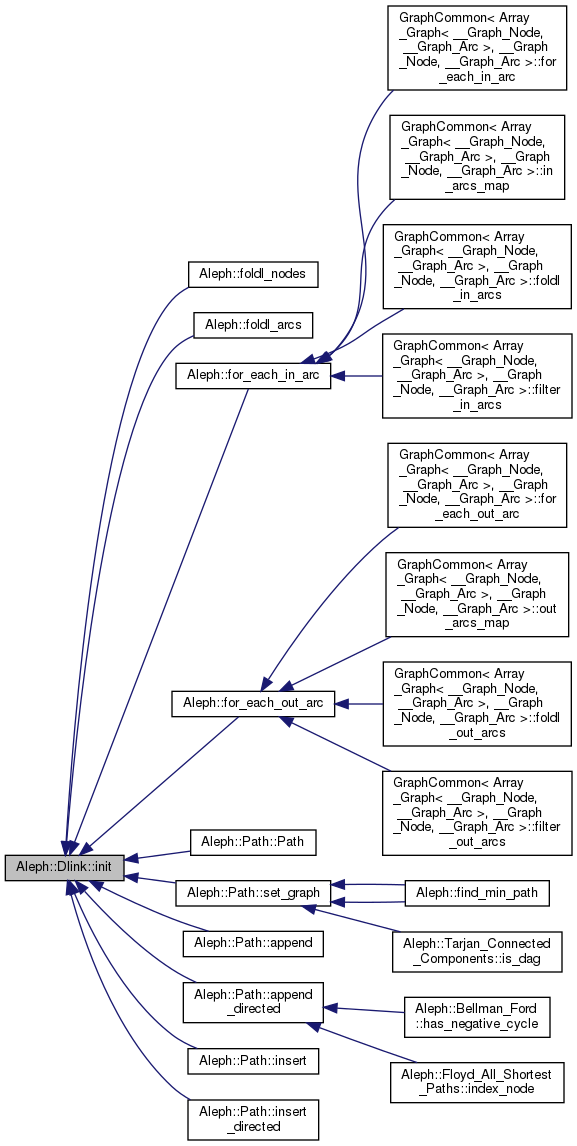
Here is the caller graph for this function:
|
inline |
Return a reversed copy of this
|
inlinenoexceptinherited |
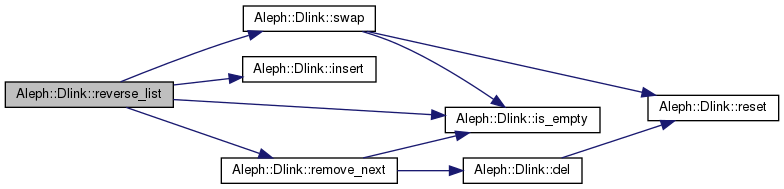
Reverse the list.
Here is the call graph for this function: Here is the caller graph for this function:
|
inlineinherited |
Rotate to left the list n positions.
rotate_left(n) rotates the items to left n positions. For example, if the list is as follows:
l0, l1, l2, l3, l4, l5, l6, l7, l8, l9
Then rotate_left(4) produces the following state:
l4, l5, l6, l7, l8, l9, l0, l1, l2, l3
| [in] | n | the number of position to be rotated |
| domain_error | if list is empty |
Here is the call graph for this function:
|
inlineinherited |
| Aleph::DynDlist< T >::Special_Ctors | ( | DynDlist< T > | , |
| T | |||
| ) |
Construct a new list with copies of elements of list l
| [in] | l | list to be copied |
| bad_alloc | if there is no enough memory |
Here is the caller graph for this function:
|
inlinenoexceptinherited |
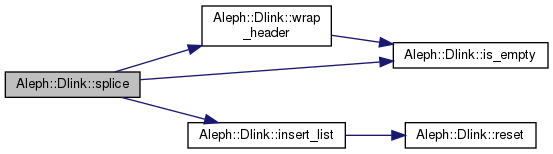
Insert a list l without header node after the node this.
| [in] | l | list without header node to be inserted after this |
Here is the call graph for this function:
|
inline |
This is an overloaded member function, provided for convenience. It differs from the above function only in what argument(s) it accepts.
|
inline |
Split the list in two.
This method takes the first n/2 items of this and puts them, in the same order, in list l. The remainder items are put in list r. After operation this becomes empty. The order of items is preserved through l and r.
| [out] | l | list containg the first n/2 first items |
| [out] | l | list containg the last n/2 first items |
| domain_error | any of the lists is noty empty |
Here is the caller graph for this function:
|
inlinenoexcept |
Split the list in two.
This method takes the first n/2 items of this and puts them, in the same order, in list l. The remainder items are put in list r. After operation this becomes empty. The order of items is preserved through l and r.
| [out] | l | list containg the first n/2 first items |
| [out] | l | list containg the last n/2 first items |
| domain_error | any of the lists is noty empty |
Here is the caller graph for this function:Split this in the middle in two lists.
split_list(l, r) searches the middle of this an on this point cuts the list in two lists l and r respectively. After the operation, this becomes empty.
l| [out] | l | first n/2 items of this |
| [out] | r | last n/2 items of this |
this before the split Here is the call graph for this function:
|
inlinenoexceptinherited |
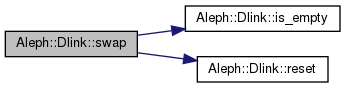
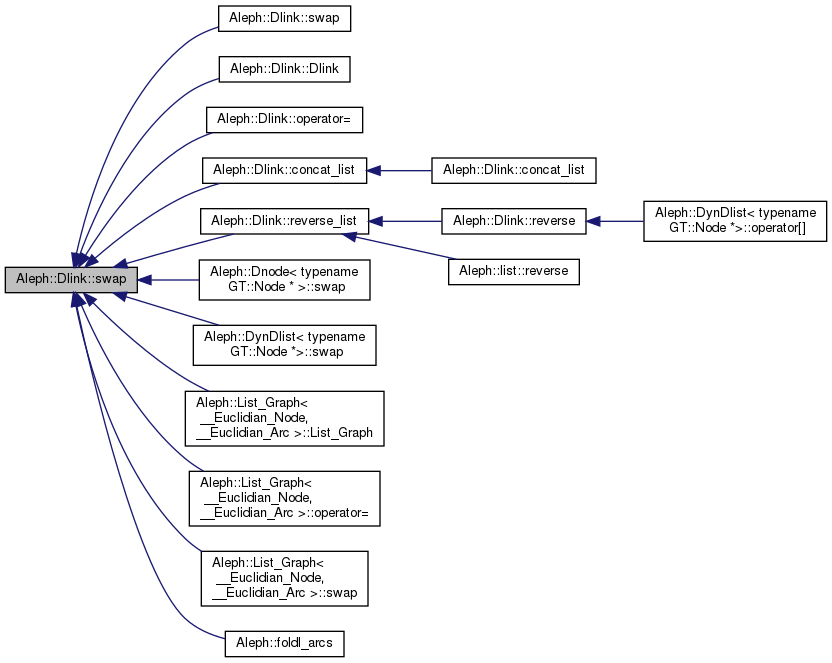
Swap this with list whose header is link.
swap(link) swaps the content og this with all the content of the list pointed by link. The operation is performed in constant time independently of sizes of both lists.
| [in] | link | pointer to the list to be swapped |
Here is the call graph for this function: Here is the caller graph for this function:
|
inlinenoexceptinherited |
Swap this with list whose header is l.
swap(l) swaps the content og this with all the content of the list referenced by l. The operation is performed in constant time independently of sizes of both lists.
| [in] | l | list to be swapped with this |
Here is the call graph for this function:
|
inlinenoexcept |
Swap in constant time all the items of this with all the items of l (very fast!)
Here is the caller graph for this function:
|
inlineinherited |
Return a list with the first n elements seen in the container during its traversal.
The complexity of this method is where n can be less than the number of elements of container.
DynList<T> having the first n elements according to its traversal order. | bad_alloc | if there is no enough memory or out_of_range if n is greater or equal than the number of elements in the container. |
|
inlineinherited |
Return a list with elements seen in the container between i and j position respect to its traversal.
The complexity of this method is where n can be less than the number of elements of container.
DynList<T> having the first n elements according to its traversal order. | bad_alloc | if there is no enough memory or out_of_range if n is greater or equal than the number of elements in the container. |
|
inline |
This is an overloaded member function, provided for convenience. It differs from the above function only in what argument(s) it accepts.
|
inlineinherited |
This is an overloaded member function, provided for convenience. It differs from the above function only in what argument(s) it accepts.
Here is the call graph for this function:
|
inlineinherited |
Exclusive partition of container according to a filter criteria.
This methos has exactly the same semantic than partition(Operation & op), excepts than instead of returning a std::pair it returns a std::tuple.
| [in] | op | operation instrumenting the filter criteria |
std::tuple<DynList<T>, DynList<T>>.firstcontains the filteres elements andsecondthe non-filtered ones. \throw anything that could throw op orbad_alloc` if there is no enough memory
|
inlineinherited |
This is an overloaded member function, provided for convenience. It differs from the above function only in what argument(s) it accepts.
|
inlinenoexceptinherited |
Traverse the container via its iterator and performs a conditioned operation on each item.
traverse(operation) instantiates the internal iterator of the class and traverses each item performing operation(item).
operation must have the following signature:
bool operation(const typename Container::Item_Type & item)
If operation(item) returns true then the iterator is advanced and the next item processed. Otherwise. the traversal stops.
| [in] | operation | to be performed on each item |
true if all the items were visited (operation on each one always returned true) or false if the traversal was stoppep because there was a false result on an item. | anything | that could throw operation |
|
inlinenoexceptinherited |
This is an overloaded member function, provided for convenience. It differs from the above function only in what argument(s) it accepts.
|
inlinenoexceptinherited |
This is an overloaded member function, provided for convenience. It differs from the above function only in what argument(s) it accepts.
|
inlinenoexceptinherited |
This is an overloaded member function, provided for convenience. It differs from the above function only in what argument(s) it accepts.
|
inlinenoexceptinherited |
Wrap a header to a list (without header).
Sometimes, especially for low level applications, you coult manage linked list without header nodes. In this case, in order to profit some operations expeting a list with header, you could "wrap" a temporal header and use the list and the operations of this class.
For example, suppose we have a list l without header node and we wish to insert it into a another list with a header node. In this case, we wrap a header to l as follows:
Dlink h;
h.wrap_header(l);
Now, if we have a node p of another list, we could insert l after p as follows:
p->insert_list(&h);
After this operation h becomes empty and the list l is inserted after the node p
| [in] | l | first node of a double and circular list without header node |
Here is the call graph for this function: Here is the caller graph for this function: