 |
Aleph-w
1.9
General library for algorithms and data structures
|


|
|
Aleph-w
1.9
General library for algorithms and data structures
|
|
#include <tpl_hash_cache.H>
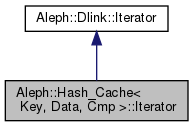
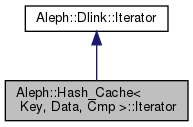
 Inheritance diagram for Aleph::Hash_Cache< Key, Data, Cmp >::Iterator: Collaboration diagram for Aleph::Hash_Cache< Key, Data, Cmp >::Iterator:
Public Types | |
| typedef Hash_Cache | Set_Type |
| El tipo de conjunto sobre el cual se itera. | |
| typedef Cache_Entry * | Item_Type |
| El tipo de elemento que retorna get_curr(). | |
Public Member Functions | |
| Iterator (Hash_Cache &cache) | |
| Instancia un iterador sobre cache. | |
| Cache_Entry * | get_curr () |
| Retorna el Cache_Entry actual. | |
| void | set (Dlink *new_curr) noexcept |
| void | reset_first () noexcept |
| Reset the iterator to the first item of list. | |
| void | reset_last () noexcept |
| Reset the iterator to the last item of list. | |
| void | end () noexcept |
| Put the iterator out of range. | |
| bool | has_curr () const noexcept |
Return true if the iterator has current item. | |
| bool | is_last () const noexcept |
| Dlink * | get_curr_ne () const noexcept |
| Return the current link guaranteeing no exception. Be careful. | |
| Dlink * | get_curr () const |
| bool | is_in_first () const noexcept |
Return true if the iterator is positiones on the first item. | |
| bool | is_in_last () const noexcept |
Return true if the iterator is positiones on the last item. | |
| void | prev_ne () noexcept |
| void | prev () |
| void | next_ne () noexcept |
| void | next () |
| bool | operator== (const Iterator &it) const noexcept |
Return true if this and it are positioned on the same item. | |
| bool | operator!= (const Iterator &it) const noexcept |
Return true if this and it hace different states. | |
| Dlink * | del () |
| Dlink * | del_ne () noexcept |
| bool | verify (Dlink *l) const |
Return true if the iterator is on the list pointed by l | |
| bool | verify (const Iterator &it) const |
Return true if this and it are on the same list. | |
Iterador sobre los elementos contenidos en un cache. El orden de visita es desde el más recientemente accedido hasta el menos recientemente accedido.
|
inlineinherited |
Remove from the list the current node and move the iterator one position forward.
Here is the call graph for this function: Here is the caller graph for this function:
|
inlineinherited |
Return the current node of iterator
| overflow_error | if there is not current node |
Here is the call graph for this function: Here is the caller graph for this function:
|
inlineinherited |
Move the iterator one position forward
| overflow_error | if there is no current item |
Here is the call graph for this function: Here is the caller graph for this function:
|
inlinenoexceptinherited |
Move the iterator one position backward guaranteeing no exception. Be careful.
Here is the call graph for this function: Here is the caller graph for this function:
|
inlineinherited |
Move the iterator one position backward
| underflow_error | if there is no current item |
Here is the call graph for this function: Here is the caller graph for this function:
|
inlinenoexceptinherited |
Move the iterator one position backward guaranteeing no exception. Be careful.
Here is the call graph for this function: Here is the caller graph for this function:
|
inlinenoexceptinherited |
Set the current node .
This method set the current node to new_curr, which of course must be a valid pointer to a item in the list.
| [in] | new_curr | pointer to the new current item |
Here is the caller graph for this function: